
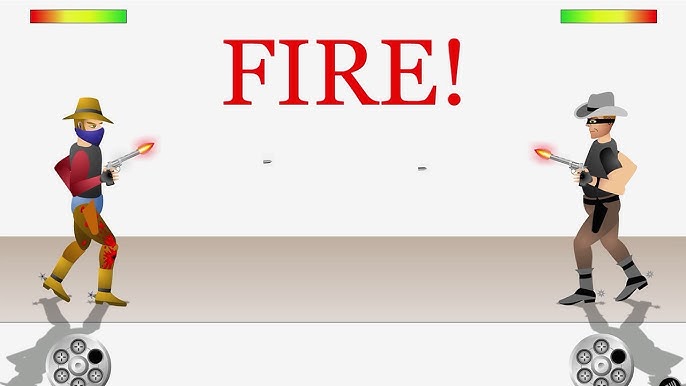
Gunblood is the kind of game that laughs at you for being overconfident. The first time I played it, I thought, “How hard can this be?” Two seconds later, my character was face-down in the dirt, and I was staring at a defeat screen wondering what just happened. That moment pretty much sums up the Gunblood experience: fast, unforgiving, and weirdly addictive.
At its core, Gunblood is a browser-based duel shooter inspired by classic Western shootouts. You pick from a roster of stylized gunslingers and face off against opponents one at a time. The rules are simple: wait for the signal, draw your weapon, aim with the mouse, and fire before your opponent does. The faster and more accurate you are, the better your chances of surviving. As you advance, enemies become quicker, smarter, and far less forgiving of mistakes.
What I personally enjoy about Gunblood is how it turns milliseconds into the most important currency in the game. There’s no running around, no hiding behind cover, and no second chances. If your hand slips or your focus breaks for even a fraction of a second, you lose. It’s both frustrating and hilarious, especially when you realize that the game is punishing you for the same bad habits you didn’t even know you had.
Of course, Gunblood isn’t a game I’d play for hours on end. Its simplicity is both its strength and its weakness. After a while, the duels can start to blend together, and there’s only so much variety you can squeeze out of quick-draw mechanics. Still, that doesn’t stop me from coming back. Gunblood works best in short bursts, like a strong cup of coffee instead of a full meal.
What sets Gunblood apart from other online shooters is its focus on tension rather than chaos. Most shooting games overwhelm you with enemies, explosions, and constant movement. Gunblood does the opposite. It slows everything down, forces you to wait, and then demands perfection in a split second. That design choice makes every duel memorable, even when you lose.
I think everyone should play Gunblood because it reminds us that games don’t have to be complicated to be fun. It’s a great way to test your reflexes, laugh at your own mistakes, and experience a kind of pressure that’s rare in modern browser games. You’ll lose a lot, you’ll probably yell at your screen once or twice, but you’ll also keep clicking “retry.” And honestly, that’s a pretty good sign that a game is doing something right.